Specialist Pipeline Surveys
ECAPARS Co. has surveyed thousands of kilometers of pipeline across hundreds of sites from deserts to mountains. We can conduct pipeline condition surveys using a range of techniques including:
Direct Current Voltage Gradient survey (DCVG)
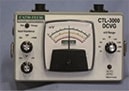
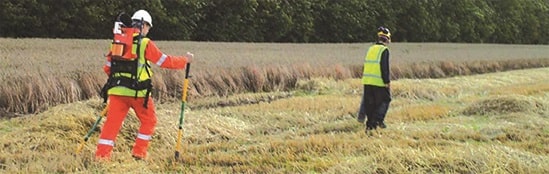
Using a pulsed dc current on the pipeline, the survey investigates voltage gradients associated with external coating defects, using two earth contact probes and a sensitive centre-zero voltmeter. Severity of defects can be assessed and effectiveness of cathodic protection at the defect determined.
Close Interval Potential Surveys (CIPS)
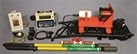
CIPS are carried out to provide a profile of the potential level throughout the length of a metallic structure. The profile can include both 'On' and instantaneous 'Off potentials to assess the Cathodic Protection performance. This survey procedure can also be used to identify areas affected by interaction.
Coating evaluation by Pipeline Current Mapping (PCM) and AC Voltage Gradient - (ACVG) surveys
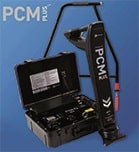
The PCM+ Pipeline Current Mapper System consists of a portable transmitter and a hand-held receiver. The transmitter applies a special signal to the pipeline. The receiver locates this signal at distances up to 30 km ( 19 miles) to identify the position and depth of the pipe. Once the pipe has been located, the technician can map the leakage currents along the pipe both in magnitude and direction, and quickly identify coating defects. Once the segment of pipeline with the fault has been identified, the fault position and depth can be further pinpointed to within 1 meter ( 3 feet) by using an A-frame.
The PCM+ uses a powerfu feature set consisting of Automatic Signal Attenuation (ASA), Advanced Current Direction (ACD) and Adaptive Ground Compensation (AGC). This allows the PCM+ to accurately and easily map the pipeline even in areas where there is contact with other metallic structures, electrical interference, or congestion, also to perform simultaneous measurement of PCM current (ACCA) and Voltage Gradient (ACVG).
- Soil analysis and SRB testing
- AC & DC Interference investigation and Mitigation